
Charging Infrastructure Installed Where You Park
EV Charger Installation in Jonesboro for residential and commercial properties adding electric vehicle charging capability
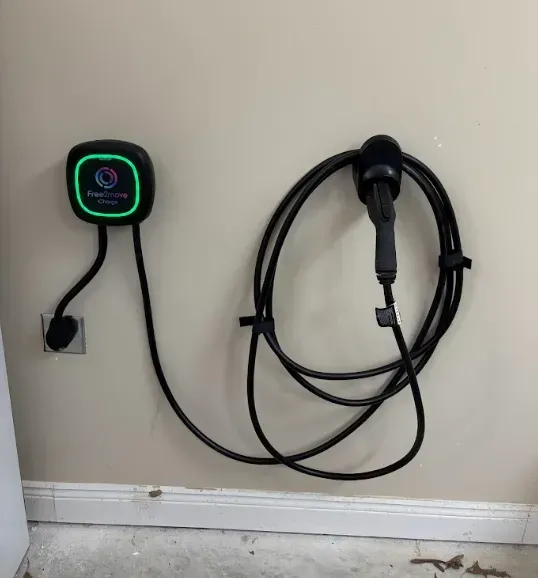
Installing an EV charger at your home or business eliminates the inconvenience of searching for public charging stations and ensures your electric vehicle starts each day with a full charge. Chamberlain Electric LLC installs Level 2 EV chargers in Jonesboro that deliver 240-volt power through dedicated circuits, which charge most electric vehicles in four to eight hours compared to the 24-hour-plus charging times typical of standard 120-volt outlets. Proper installation requires circuit sizing that matches the charger's maximum output, wiring rated for continuous duty operation since EV charging often runs for extended periods, and locations that position the charging connector within reach of your vehicle's charge port without requiring extension cords that introduce voltage drop and create tripping hazards.
The installation process begins with evaluating your electrical panel's available capacity, determining the optimal charger location based on parking patterns and proximity to the panel, running appropriately sized wire through conduit to protect it from physical damage, and mounting the charging unit at a height and position that keeps the connector off the ground when not in use. Code-compliant installations include ground-fault protection specific to EV charging circuits, which differs from standard GFCI protection and prevents nuisance trips that interrupt overnight charging cycles.
Request an installation estimate to evaluate your property's electrical capacity and discuss charger placement options suited to your parking configuration.
EV chargers draw continuous loads at their rated amperage for hours at a time, which means a 40-amp charger requires a 50-amp circuit to meet code requirements that continuous loads not exceed 80 percent of circuit capacity, and the wire feeding that circuit must be sized not just for amperage but also for the circuit length to minimize voltage drop that reduces charging efficiency. Homes in Northeast Arkansas with 100-amp service may require panel upgrades to accommodate EV chargers alongside existing HVAC, water heater, and appliance loads without overloading the main service.
After installation, you'll notice charging that completes overnight without requiring you to monitor charging status or move your vehicle to public charging stations, predictable charging costs based on your utility rate rather than variable public charging fees, and the convenience of unplugging and driving without planning routes around charger availability. Installations by Chamberlain Electric LLC ensure compatibility with your vehicle's onboard charging system and provide the circuit capacity needed for reliable operation without overloading your electrical service.
Commercial installations often involve multiple chargers with load management systems that prevent simultaneous charging from exceeding available service capacity, and workplace chargers may require separate metering if charging costs are billed to individual employees or customers rather than included in facility operating costs.
Answers to Frequent EV Charger Questions
Property owners considering EV chargers often need clarity on electrical requirements and installation logistics before committing to the upgrade.
What electrical capacity does a home EV charger require?
Most residential Level 2 chargers operate at 32 amps or 40 amps, requiring dedicated 40-amp or 50-amp circuits respectively, though chargers with adjustable output allow you to reduce charging speed if your electrical service can't support maximum output without approaching panel capacity limits.
How do you determine where to mount the charger?
Charger location depends on parking position relative to the charge port on your vehicle, distance from the electrical panel to minimize wire runs and installation cost, and mounting surface that provides secure attachment and weather protection, with most residential installations using garage walls or exterior-rated pedestals for uncovered parking areas.
Why can't a standard outlet be used instead of a dedicated charger?
Standard 120-volt outlets deliver only 12 to 16 amps, providing roughly 4 to 5 miles of range per hour of charging, which means overnight charging on a standard outlet may not fully replenish the battery on vehicles with larger battery packs or after longer daily drives, while Level 2 chargers provide 25 to 30 miles of range per hour.
When does EV charger installation require a permit?
Electrical permits are required for EV charger installations in Jonesboro because the work involves adding a new dedicated circuit, and inspections verify that wire sizing, overcurrent protection, and grounding meet code requirements for the continuous loads and ground-fault protection specific to EV charging equipment.
What charger features matter most for daily use?
Adjustable output allows matching charging speed to available electrical capacity, hardwired units eliminate the plug connection point that can loosen over time, and cable length between 18 and 25 feet accommodates different parking positions without excess cable that clutters the charging area or requires coiling after each use.
Chamberlain Electric LLC installs EV charging systems sized correctly for your electrical service and positioned conveniently for your parking needs. Contact us to discuss charger options and schedule an installation that brings charging capability directly to your property.