
Panels Built for Modern Electrical Demands
Electrical Panel Upgrades and Replacement in Jonesboro for aging equipment, increased capacity needs, and improved circuit protection
Electrical panels rated for 100 amps that now feed homes with central air conditioning, electric ranges, multiple computers, and EV chargers operate at or beyond their designed capacity, which forces breakers to carry continuous loads near their trip threshold and accelerates wear on bus bars and main lugs. Chamberlain Electric LLC installs upgraded electrical panels in Jonesboro when your existing panel can't safely accommodate added circuits, when the panel itself has reached the end of its service life typically indicated by rust, corrosion, or breakers that no longer seat firmly, or when your panel contains obsolete components like Federal Pacific or Zinsco breakers known for failure to trip under fault conditions. Panel replacement restores protective capacity and provides room for additional circuits without overloading the main bus.
The upgrade process involves sizing the new panel based on your current and anticipated electrical load, installing it with proper clearances that meet current code requirements, transferring existing circuits to new breaker positions, and verifying that all connections achieve specified torque values. In Northeast Arkansas, panel upgrades often coincide with service entrance upgrades when the utility drop and meter base also require increased capacity to support 200-amp service.
Schedule a panel evaluation to determine whether your current electrical panel meets the demands of your property's electrical systems.
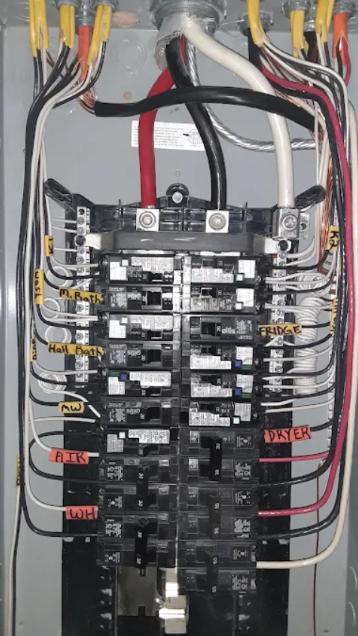
Licensed electricians shut down power at the meter, remove the old panel while documenting how existing circuits were configured, mount the new panel enclosure with appropriate working clearances, install the main breaker and branch breakers, and reconnect each circuit to its new breaker position while verifying wire size matches breaker rating. Code-compliant installations include proper bonding between the panel enclosure and grounding system, correctly sized neutral and ground bars, and labeling that identifies each circuit's function, which becomes critical during future troubleshooting or renovation work.
After the new panel is energized, you'll notice breakers that reset positively without feeling loose or worn, additional slots available for new circuits without resorting to tandem breakers that crowd the panel, and improved voltage stability across circuits because the new bus bars and connections eliminate resistance that developed in the old panel over decades of thermal cycling. Chamberlain Electric LLC ensures that panel installations provide adequate capacity for modern electrical loads while maintaining the protective function that prevents circuit overloads from progressing to conductor damage or fire risk.
Panel upgrades also provide an opportunity to correct issues that may have existed in the original installation, such as shared neutrals that weren't properly identified, circuits without proper arc-fault or ground-fault protection where now required, or inadequate panel location that doesn't meet current clearance requirements from plumbing or gas equipment.
What Homeowners and Business Owners Ask About Panel Work
Panel upgrades represent significant electrical work that affects your entire property, so understanding when replacement becomes necessary helps with planning and budgeting.
What indicates that a panel needs replacement rather than just adding circuits?
A panel filled to capacity with no room for additional breakers, a panel that shows signs of internal overheating evidenced by discolored bus bars or melted insulation, obsolete panels with known safety issues, or panels more than 40 years old that exhibit loose breaker connections or corrosion inside the enclosure typically warrant full replacement.
How is the new panel size determined?
Electricians calculate total connected load including continuous-duty circuits like HVAC and water heaters, add capacity for planned additions like EV chargers or shop equipment, and apply demand factors based on building type to determine whether 150-amp, 200-amp, or larger service is appropriate for your usage patterns.
Why do some upgrades require utility company involvement?
When upgrading from 100-amp to 200-amp service, the utility must often replace the meter base and service drop conductors because these components are sized to match the panel rating, and this coordination requires scheduled utility work that affects project timing.
What happens to existing circuits during panel replacement?
Each circuit is transferred to the new panel maintaining its original function, though circuits may be redistributed across phases to balance load, and any circuits that don't meet current code for wire size, protection type, or grounding are identified for correction either during the panel upgrade or as a separate scope of work.
When do Jonesboro properties most commonly need panel upgrades?
Homes built before 1980 adding central air conditioning or converting to electric heat, properties installing EV chargers that require dedicated 40-amp or 50-amp circuits, and commercial buildings upgrading to LED lighting controls or adding server rooms with uninterruptible power supplies typically trigger panel capacity evaluations.
Chamberlain Electric LLC performs code-compliant panel installations that provide reliable capacity for current needs and future expansion. Request a panel assessment to evaluate your
existing electrical service and discuss upgrade options suited to your property's requirements.