
Life Safety Devices That Work When Seconds Count
Smoke and Carbon Monoxide Detector Installation in Jonesboro for homes where outdated or malfunctioning detectors compromise family safety
Chamberlain Electric LLC installs smoke and carbon monoxide detectors throughout residential properties in Paragould, ensuring each device is placed according to code requirements that dictate bedroom proximity, hallway coverage, and level-specific protection. Detectors lose sensitivity over time, with most manufacturers recommending replacement every ten years regardless of visible condition. When batteries fail or chirping begins, the underlying sensor may already be compromised, leaving gaps in protection during the hours when most fatal fires occur.
Proper installation requires matching detector type to location—ionization sensors respond faster to flaming fires, while photoelectric models detect smoldering conditions earlier, and combination units address both scenarios. Placement height, distance from corners, and proximity to air vents all affect response time, with ceiling-mounted units requiring specific spacing from walls and ducted returns to avoid dead air zones that delay detection.
Schedule a home safety evaluation to identify detector placement gaps and outdated units requiring replacement.
Code-compliant installation positions detectors within fifteen feet of every sleeping area, on every level including basements, and inside each bedroom where doors remain closed overnight. Carbon monoxide detectors are placed near sleeping areas but away from fuel-burning appliances to prevent nuisance alarms while maintaining early warning capability, with interconnected wiring ensuring that activation in one location triggers alarms throughout the home.
After installation, you notice immediate alarm response during monthly testing, with interconnected units sounding simultaneously rather than activating only at the point of detection. Hardwired detectors eliminate battery-only dependence, while battery backup maintains protection during power outages, and tamper-resistant features prevent accidental removal in homes with young children.
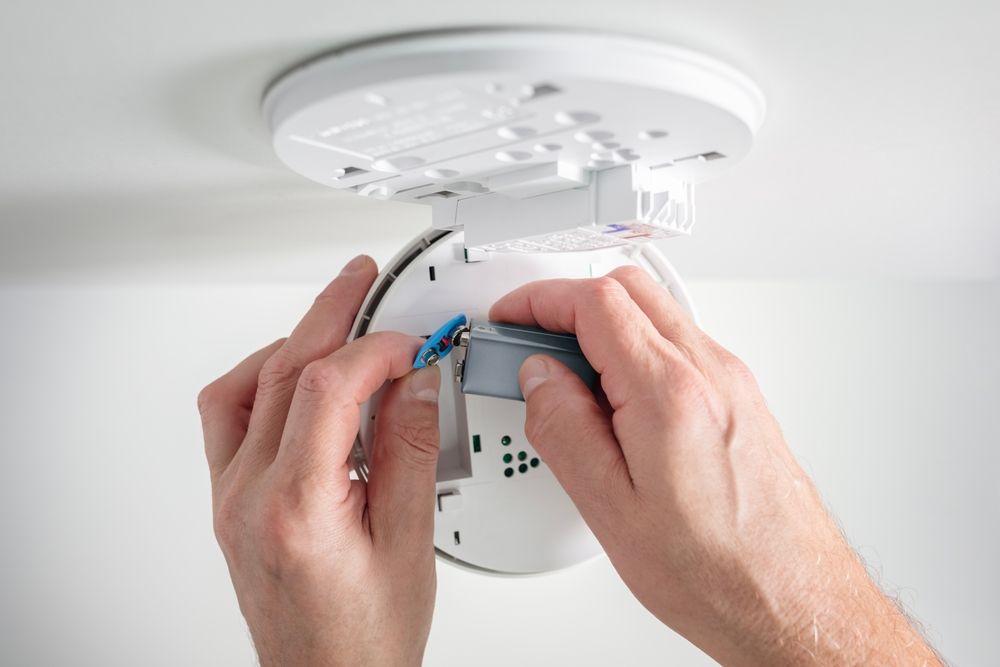
Replacement addresses detectors beyond their functional lifespan, units damaged by paint or debris, and older models lacking current dual-sensor technology. Installation includes verifying electrical connections, confirming interconnection functionality, and documenting placement for future reference during home sales or insurance reviews.
Questions Property Owners Ask Before Installation
Homeowners throughout Northeast Arkansas ask about detector placement, replacement timing, and installation methods before scheduling safety upgrades.
How do interconnected detectors differ from standalone units?
Interconnected detectors communicate through wiring or wireless signals so that smoke detected in a basement triggers alarms on upper floors, providing earlier warning in multi-level homes where occupants may not hear a single distant unit.
What determines detector placement in bedrooms versus hallways?
Code requires detectors inside each bedroom where doors close during sleep, since closed doors delay smoke migration by several minutes, and hallway units alone may not provide sufficient warning time for safe egress.
When should existing detectors be replaced rather than tested?
Detectors manufactured more than ten years ago require replacement regardless of test results, as sensor degradation occurs internally even when battery tests show functionality, and outdated models lack dual-sensor technology that reduces false alarms while improving detection speed.
Why do carbon monoxide detectors require specific placement?
Carbon monoxide disperses evenly rather than rising like smoke, so detectors are installed at breathing height near sleeping areas but away from kitchens and furnaces where normal combustion byproducts cause nuisance alarms that lead to disconnection.
How does hardwired installation improve reliability compared to battery-only models?
Hardwired detectors maintain constant power without depending on battery replacement schedules that homeowners often overlook, while battery backup ensures continued operation during outages when alternative heating sources may increase carbon monoxide risk.
Chamberlain Electric LLC installs detectors that meet current code requirements and manufacturer specifications for long-term reliability. Contact us at (870) 558-8889 to arrange installation that addresses every required location in your home.